
Group
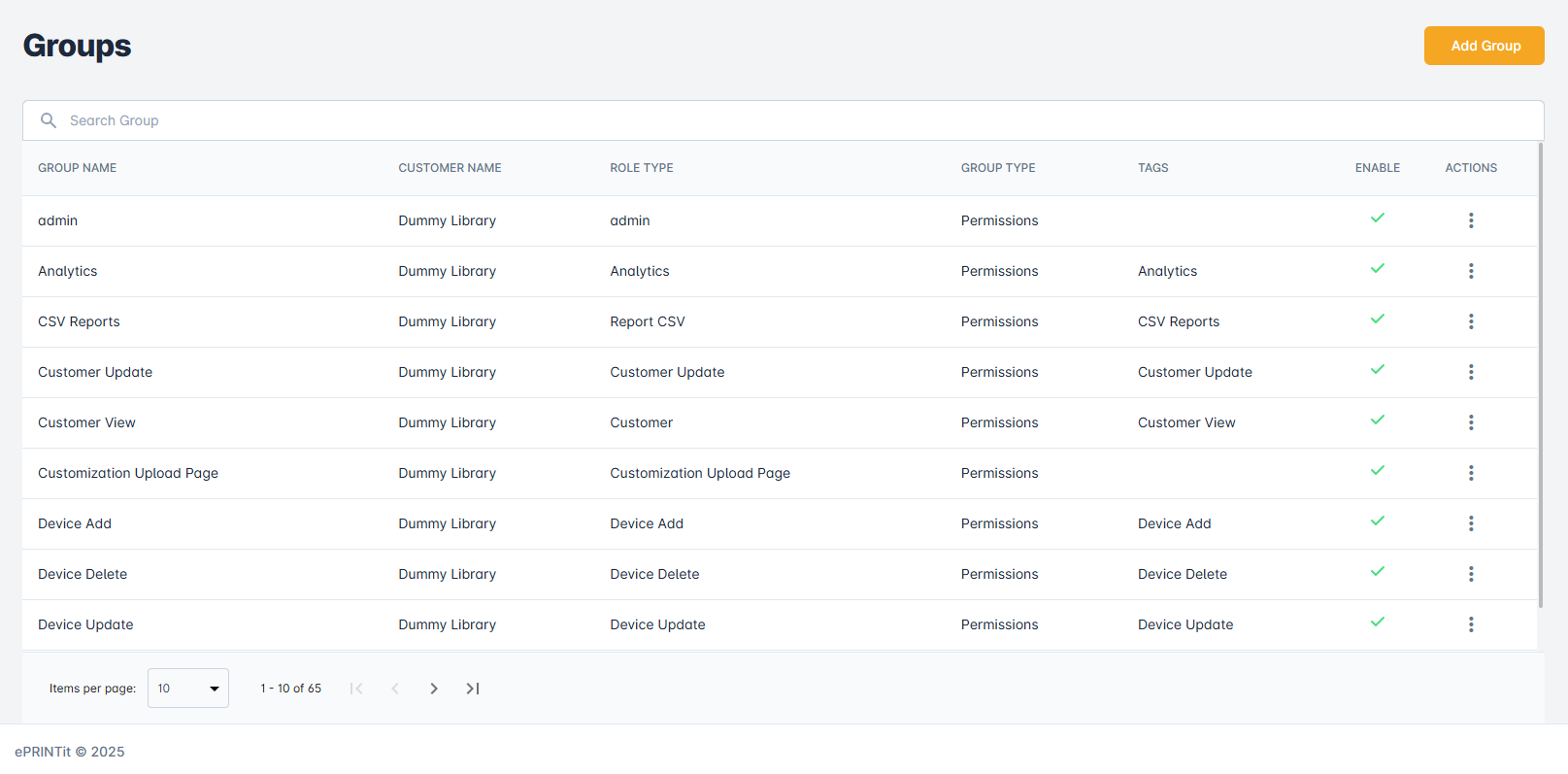
A group is a collection of multiple user accounts that share the same access rights to the system and have common security rights. In the ePRINTit SaaS there are two types of groups: Permissions and Print Configurations.
Getting Started:
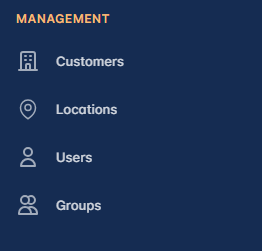
To access the Group screen, the user simply needs to login to the ePRINTit SaaS and on the menu bar navigate to the Management/Groups area. This feature is managed by permissions and the user must also be associated to a group that allows the user to access this option.
📘 Instructions
Group | Adding-a-New-Group
Group | Updating-an-Existing-Group
Group | Deleting-a--Group
Adding a New Group
Click on the Add Group button.
Enter the group’s required information.
Click on Add Group button to create the new Group.
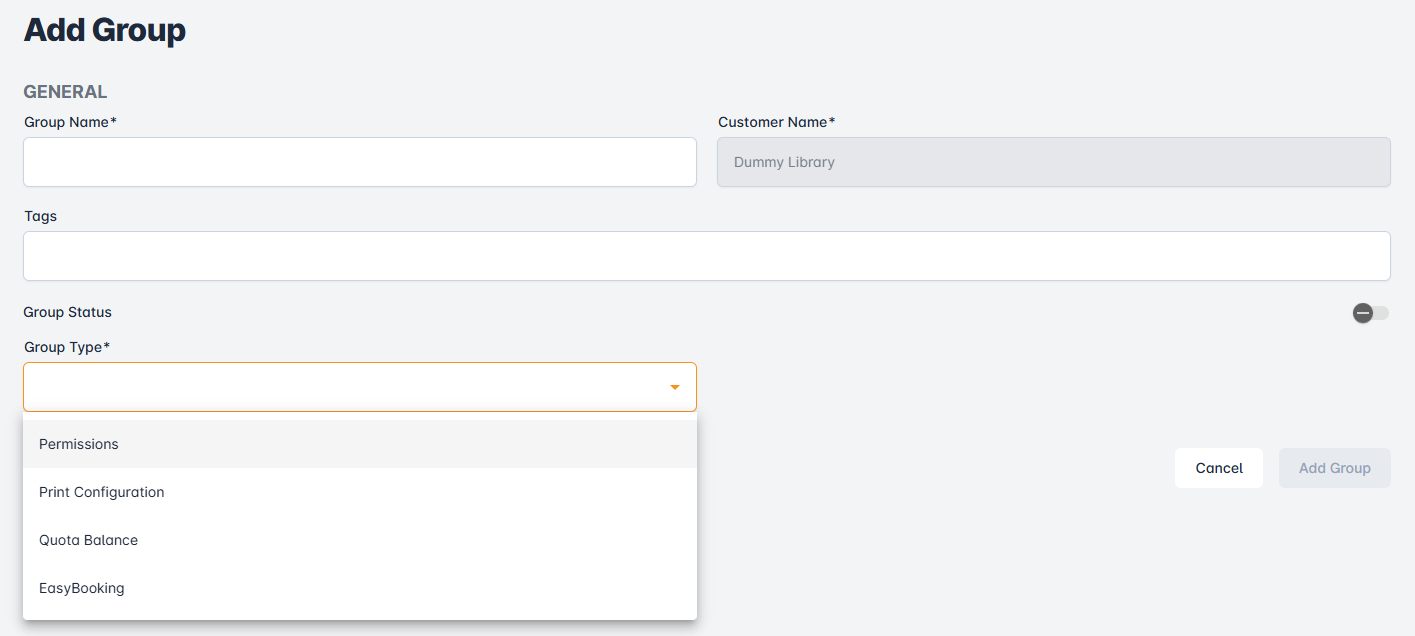
Group Name
This field is used to describe the group and it can be changed according to the customer's or user's particular needs.
Group Status
The ePRINTit SaaS Portal offers you a possibility of changing the group status.
If the group is active, all users under that group have the same permission and can access the permitted areas.
If the group is inactive, it cannot be associated to new or existing users in ePRINTit SaaS Portal.
If users are already associated to the group when it is inactivated, the users will loose all permissions related to the group.
Group Type
This field is used to describe the group type, that can be permissions or print group.

Permissions
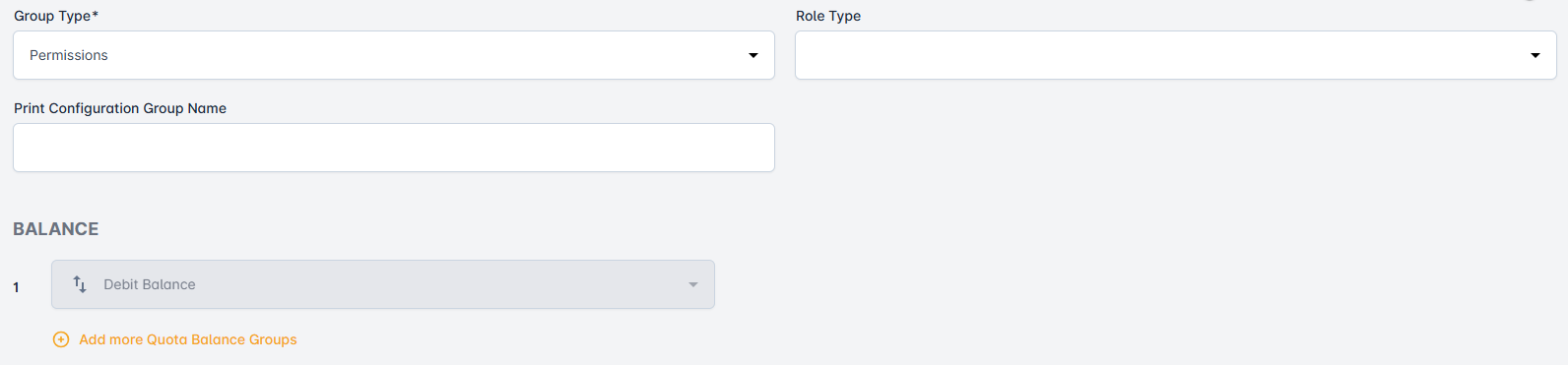
User permissions determine what actions and operations a user can perform in ePRINTit SaaS. The permissions must be associated to a role type and the role type have the navigation options the user will have access and the permissions for each one of the options.
Role Type
This field defines the role assigned to a user within the group, determining the permissions they will have access to. The selected role dictates the level of access and actions the user can perform within the system.
Print Configuration Group Name
Name of the print configuration group.
Balance
List of balance groups. In this option is it possible to add more group balances.
Print Configuration
Printer configuration group type determine which columns are displayed in Print-Release/Reprint screen and printer features associated to each printer group.
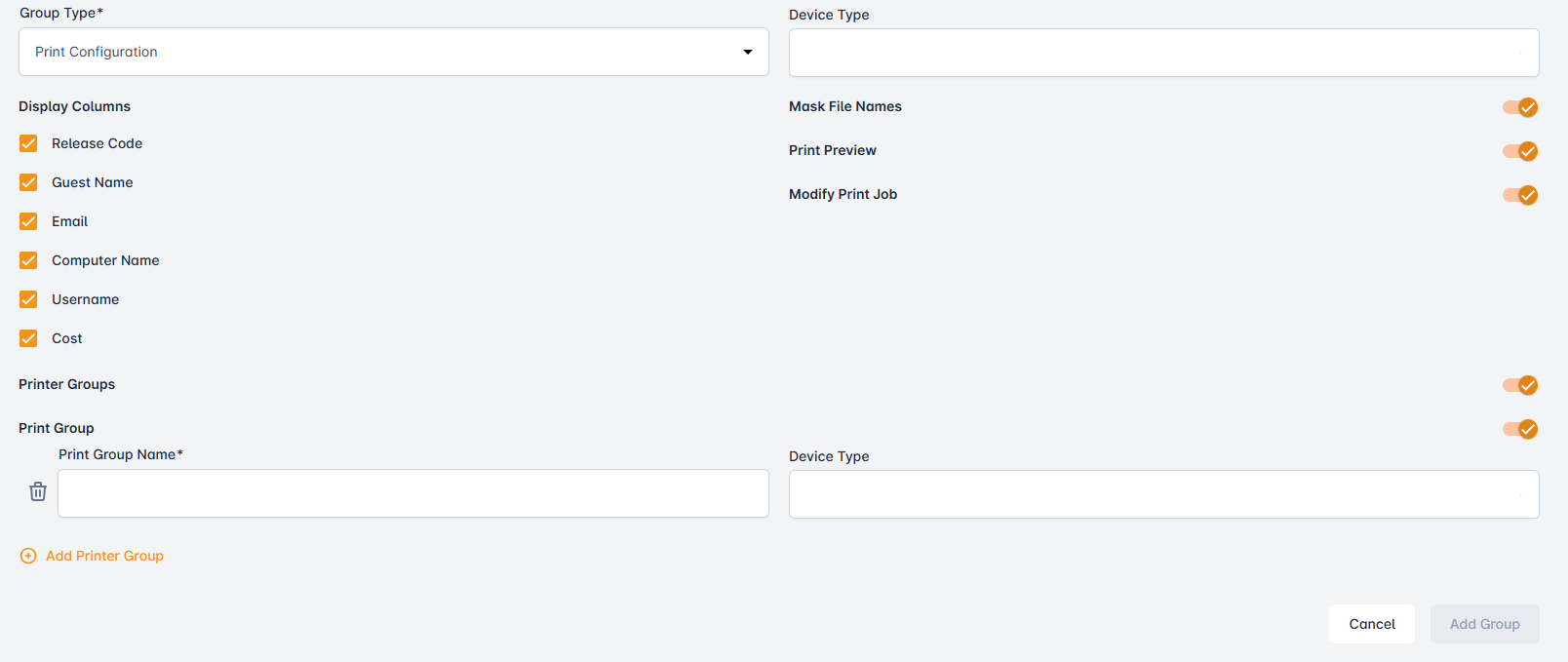
Device Type
Name of the device associated to this group (printer).
Display Columns
This field controls the columns that will be displayed in Applications/Print and User Portal/Print options - Release Code, Guest Name, Email, Username, Cost - If the field is marked, the column with this information will be displayed. If the column is not marked, the column will not be displayed.
Mask File Names
This field controls the visibility of file names in the Applications/Print and User Portal/Print options. When enabled, file names will be masked with asterisks (****), preventing users from viewing the actual names. If disabled, file names will be displayed as usual.
Print Preview
This field allows users to preview a file before printing. When this field is enabled, users can view the document's layout and content to ensure accuracy before proceeding with the print process.
Modify Print Job
This field allows users to make changes to an existing print job within the group's screen. Users can update job settings, adjust print parameters, or apply necessary modifications before finalizing the print process.
Print Group
Print Group Name
Name of the print group.
Device Type
Name of the device associated to this group (printer).
Quota Balance
The quota Balance group type determines the amount, maximum balance, and frequency.
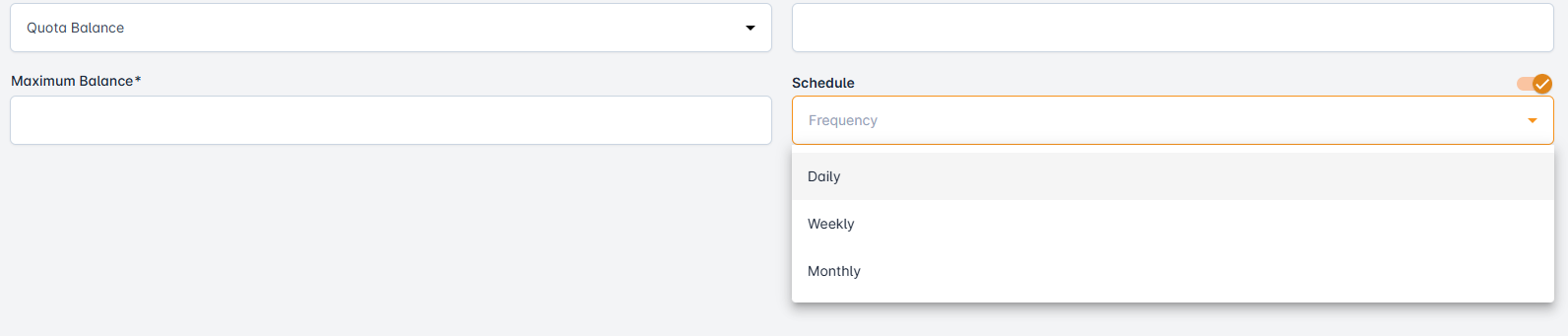
Schedule
If this toggle bar is enabled then you can set the frequency for the quota balance.
Frequency
User can select the frequency for the quota balance. You can set the frequency as Daily, Weekly, or Monthly.
Easy Booking
The EasyBooking Group automatically assigns users to permission groups based on rules configured in the EasyBooking system. It supports multiple identity providers (IDPs), including Sirsi, Innovative, Polaris and SIP2.
When a user logs in, their data is evaluated against active EasyBooking groups. The system selects the correct permission group based on rule matches and priority. If no rule matches, the default permission group for the IDP is used.
It’s a logical collection of one or more subgroups, each describing conditions that define which users belong to the group.
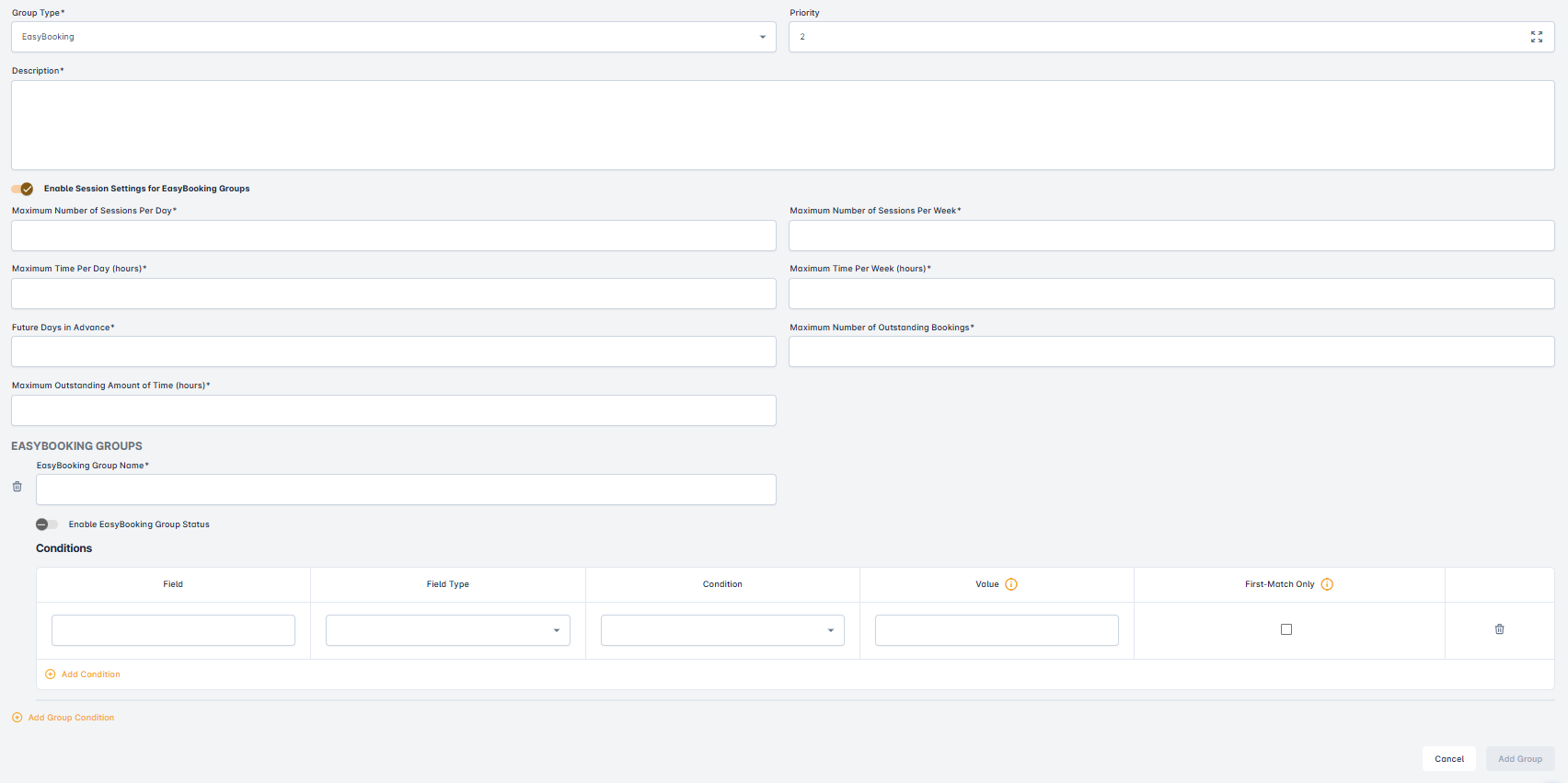
Priority
Defines the order in which the EasyBooking Group is evaluated when multiple groups meet the same matching conditions. A lower number indicates a higher priority. The system processes groups in priority order to determine which rule applies first. They are numerical ranking for groups. They can be: lower number = higher priority, groups are evaluated in ascending priority order or the first matched group is selected.
Description
Provides a brief, user-defined summary explaining the purpose or function of the EasyBooking Group. This helps administrators understand the group’s role and usage within the booking workflow.
Enable Session Settings for EasyBooking Groups
When enabled, this option applies specific session settings (such as time limits, restrictions, or custom rules) to users assigned to this EasyBooking Group. If disabled, the group will not override default session settings.
EasyBooking Group Name
The unique name assigned to the EasyBooking Group. This identifier is used throughout the system to reference and manage the group. The name should be clear and descriptive to ensure easy recognition.
Enable EasyBooking Group Status
Indicates whether the EasyBooking Group is active or inactive.
Enabled: The group rules are applied during the booking and session process.
Disabled: The group is ignored, and its rules are not enforced.
Field
Condition
Defines the operator used to compare the selected field with the value provided. Conditions may include equals, contains, starts with, ends with, or other match types depending on system configuration. They are Individual rules checked against user data (e.g., Age > 18, Barcode starts with "YTH"). Supported condition types:
Condition Type | Description | Example |
|---|---|---|
greater_than | Numeric value must be greater than target | Age > 65 |
less_than | Numeric value must be less than target | Age < 25 |
between | Numeric value within inclusive range | Age BETWEEN [12, 18] |
equal | String must match (case-insensitive). Supports CSV. | MembershipType = "Student,Admin" |
not_equal | String must not match any listed values. Supports CSV. | Status ≠ "Inactive,Deleted" |
starts_with | String must start with prefix (case-insensitive) | Barcode STARTS_WITH "YTH" |
Value
The text or data value the system compares against the selected field. The EasyBooking Group will apply to users whose attribute matches this value based on the defined condition.
First Match Only
Enables the system to stop searching after it finds the first matching user or group entry during the booking lookup process.
Updating an Existing Group
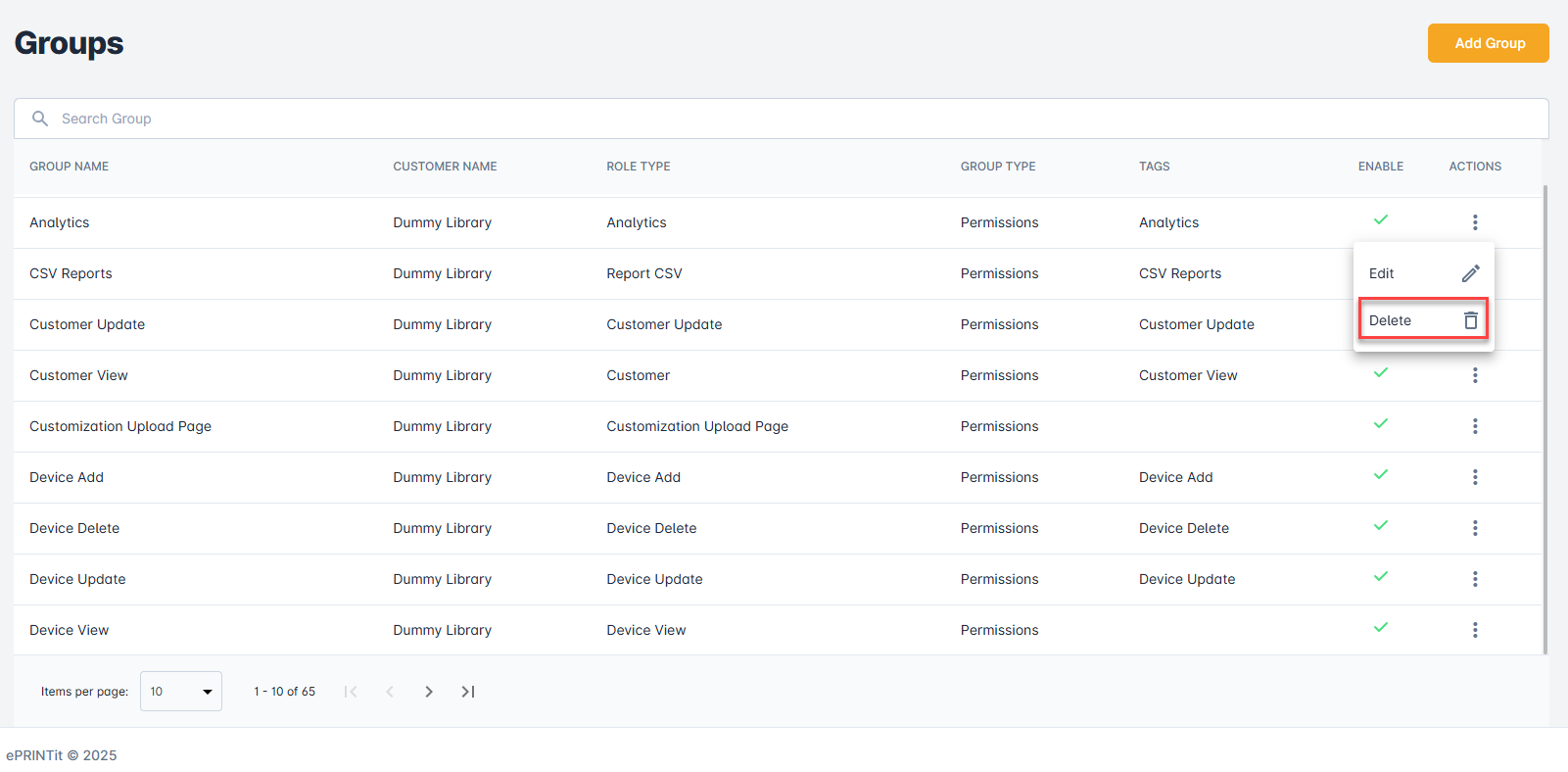
Click the three dots under the Actions column and select the Edit option.
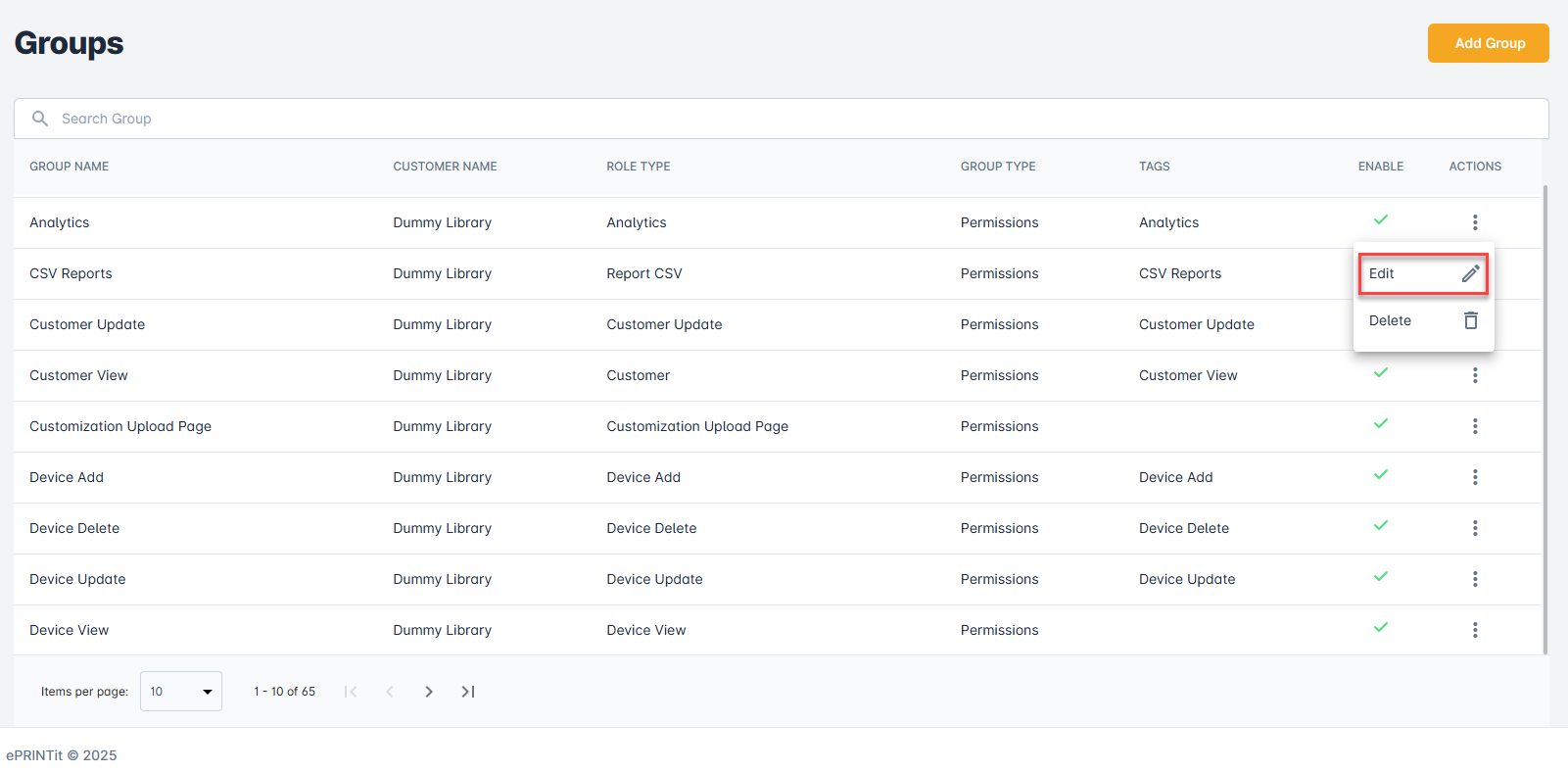
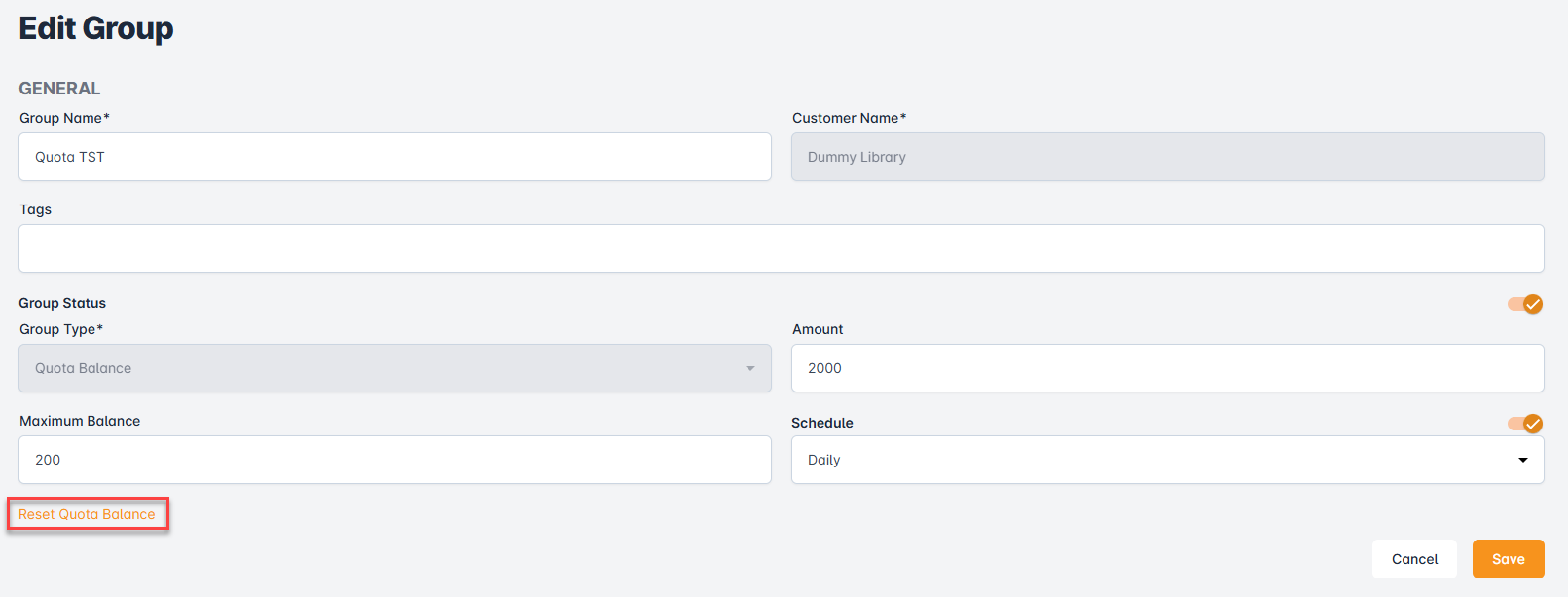
The Edit Group screen will be displayed. After the necessary changes are made, click the Save button.
Reset Quota Balance
After adding Quota Balance Group, when in Edit screen, you will find an option for resetting quota balance for group of users who are associated with the select Quota Balance Group.
Deleting a Group
Click the three dots under the Actions column and select the Edit option.
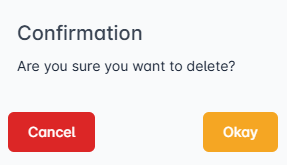
A confirmation message will be displayed. Once confirmed, the group will be deleted from the ePRINTit SaaS system.
EasyBooking Group Rule Tester
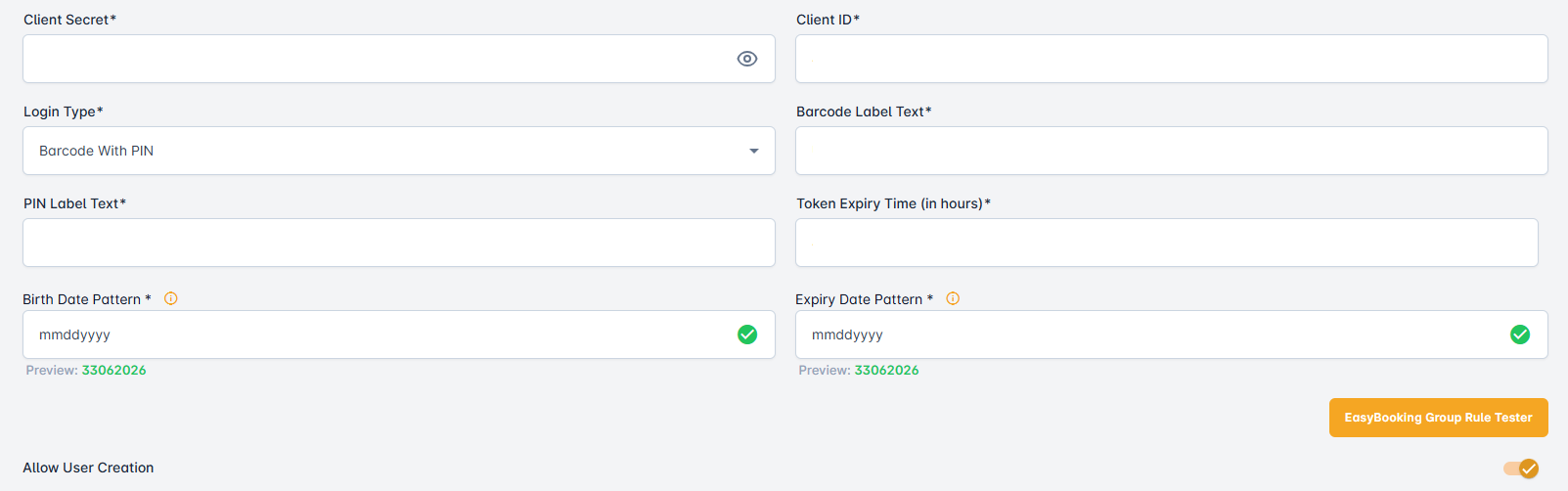
The EasyBooking Group Rule Tester is a built-in tool that helps administrators make sure their EasyBooking group rules are working correctly. It lets you test real user barcodes and PINs and immediately see which group the user would be matched to, based on your current EasyBooking rules.
This tool is available for all supported Identity Providers (IDPs):
Polaris
Sirsi
SIP2
Innovative
Each IDP has its own tester inside its settings page.
Use the Rule Tester
The Rule Tester helps you:
Check whether your EasyBooking rules are configured correctly
Confirm users are being placed into the right permission groups
Troubleshoot rule issues without affecting live users
Make sure the IDP (Sirsi, Polaris, etc.) is sending the fields your rules rely on
See results in both a simple visual format and a more detailed technical format (JSON)
Where to Find the Tester
You can open the tester from each IDP’s configuration page:
Identity Provider Settings → Sirsi → EasyBooking Group Rule Tester
Identity Provider Settings → Polaris → EasyBooking Group Rule Tester
Identity Provider Settings → SIP2 → EasyBooking Group Rule Tester
Identity Provider Settings → Innovative → EasyBooking Group Rule Tester
How the Rule Tester Works
1. Open the Tester
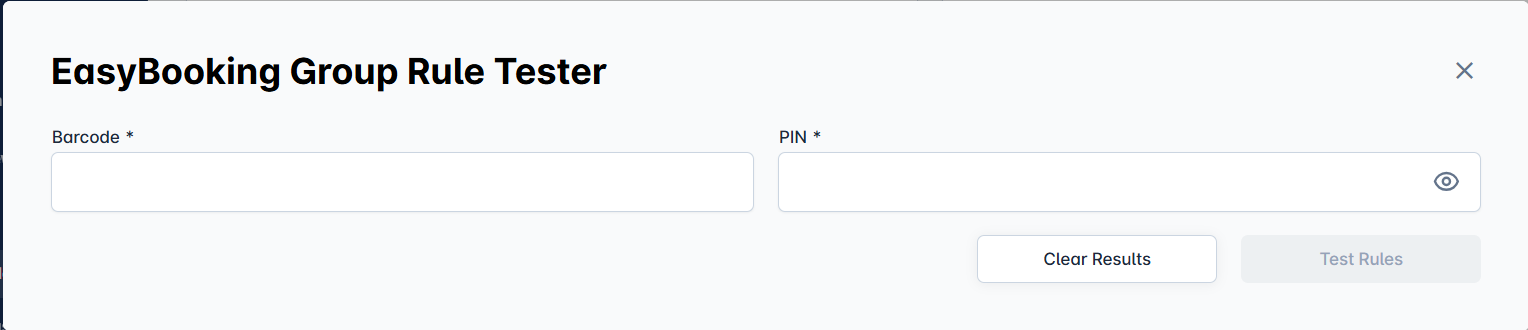
Click the EasyBooking Group Rule Tester button.
A small window opens asking for:
Barcode
PIN
These should be the same credentials a real patron would use.
2. Enter User Credentials
Enter a valid barcode and PIN, then click Test Rule.
If the credentials are wrong, the test cannot continue.
3. The System Fetches User Data
The tester contacts the IDP and retrieves the user’s information
4. The System Checks Your EasyBooking Rules
The tool compares the user’s data with all existing EasyBooking groups, in priority order.
It checks:
Each group
Each subgroup inside the group
Every condition inside the subgroup
It then identifies which group the user would be assigned to, just as if the user logged into the live system.
What You Will See in the Results
The tester shows results on two pages:
Page 1: Test Results
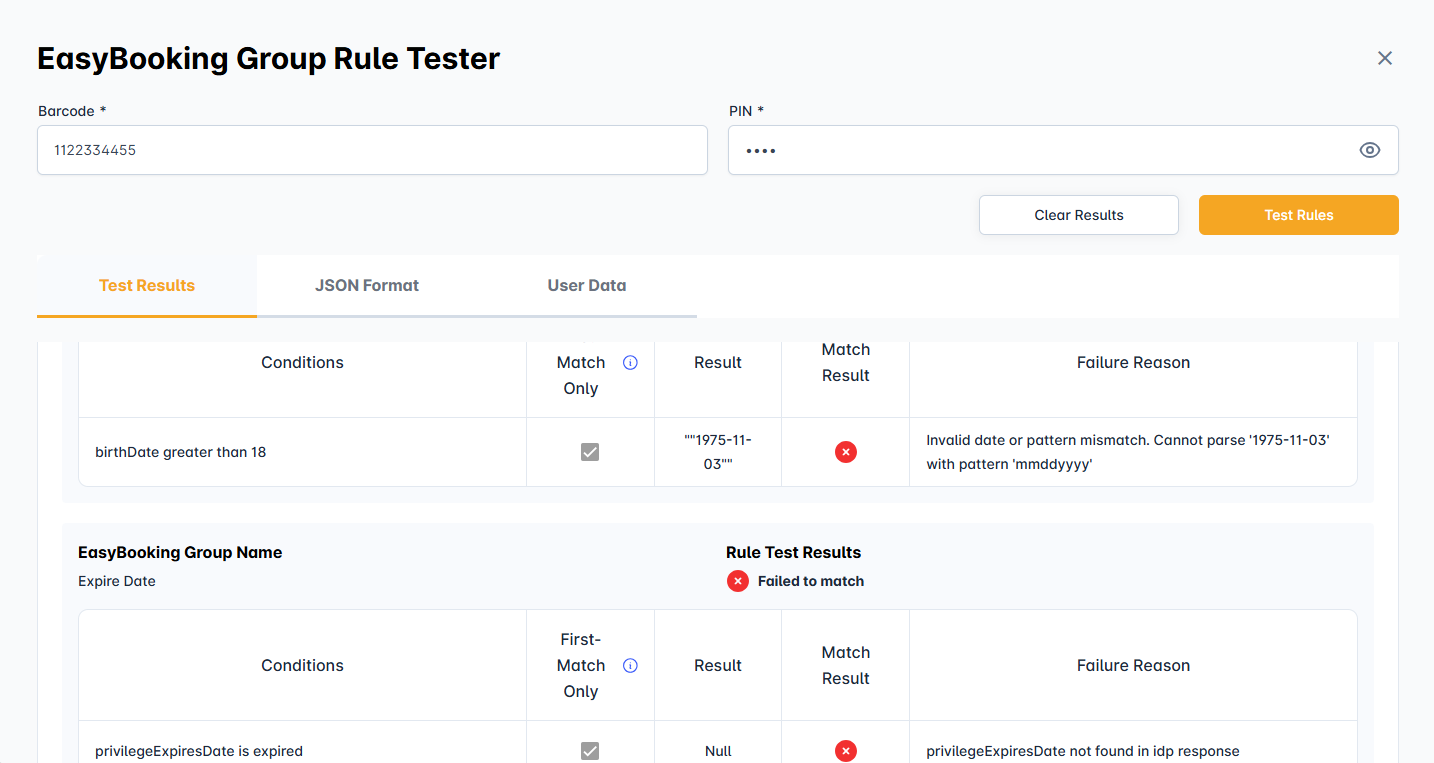
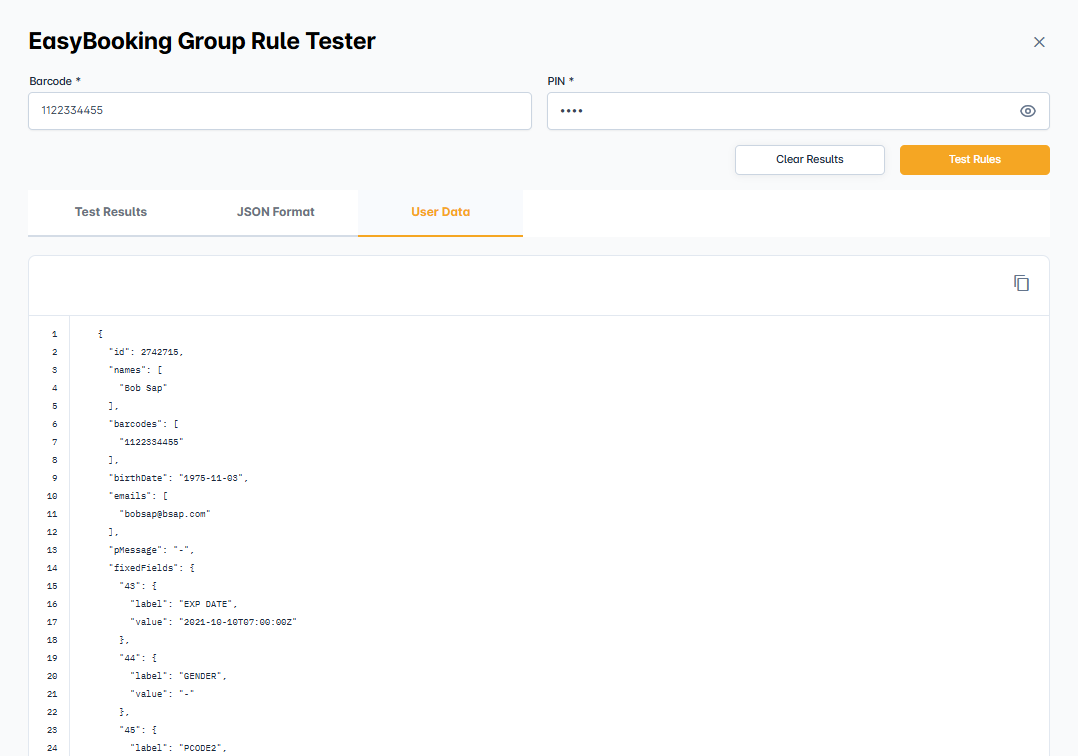
User Information returned by the IDP
A list of all your EasyBooking groups
For each group:
Whether it matched or not
Which subgroup passed or failed
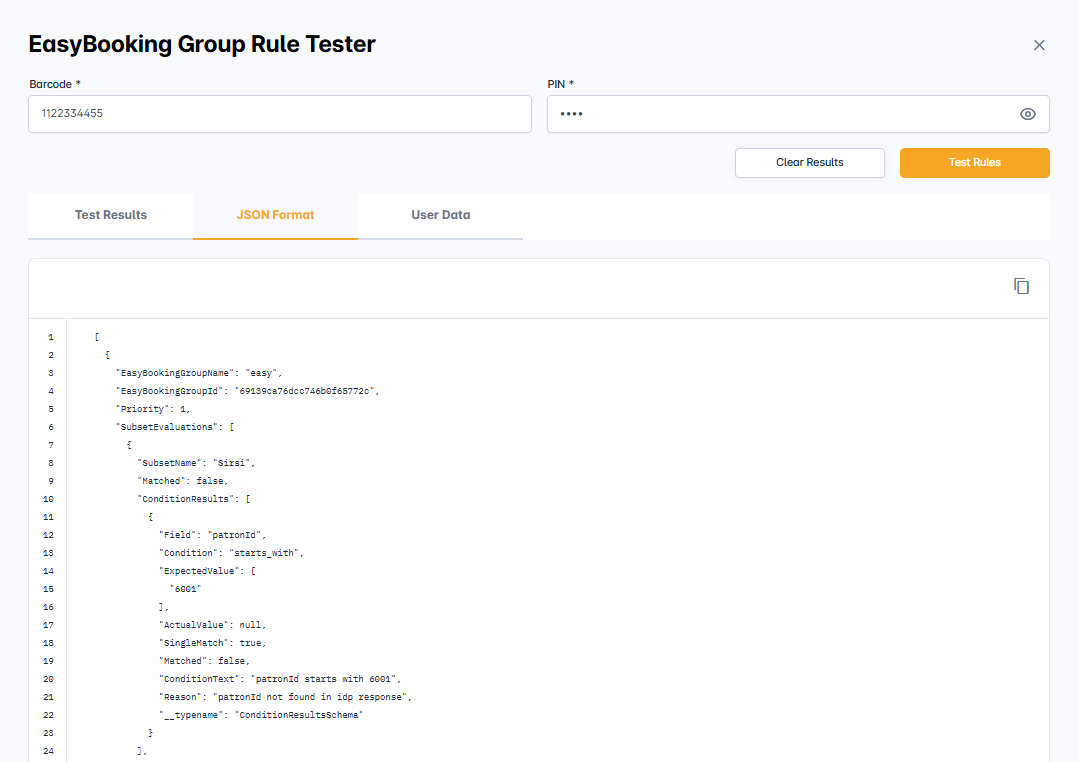
Page 2: JSON Format
Page 3: User Data
Shows the results but in raw JSON format.
Useful for developers or for advanced troubleshooting.